%20(1).png)
Bat Surveys & Planning: Protected Species in Monmouthshire

Imagine your ideal home extension in the Wye Valley is finally ready for submission, only for the process to stall because of a single roosting pipistrelle. For many homeowners in South Wales, the complex world of protected species bats ecology feels like a hidden hurdle designed to drain budgets and delay construction. It's a common worry that a simple building project might be derailed by the strict seasonal windows required for ecological assessments, especially with Monmouthshire being home to fifteen different bat species.
We understand that you want your project to move forward with certainty and care. This guide explains exactly how bat ecology impacts your planning application and why these surveys don't have to be a source of stress. You'll learn how to navigate the 2026 survey season, understand the latest requirements for night vision technology, and see how we integrate these findings into our architectural design process. We'll provide a clear roadmap to help you secure planning permission while protecting local wildlife, giving you the confidence to start your build on schedule and without unexpected costs.
Table of Contents
Understanding Protected Species: Why Bats Matter for Your Planning Application
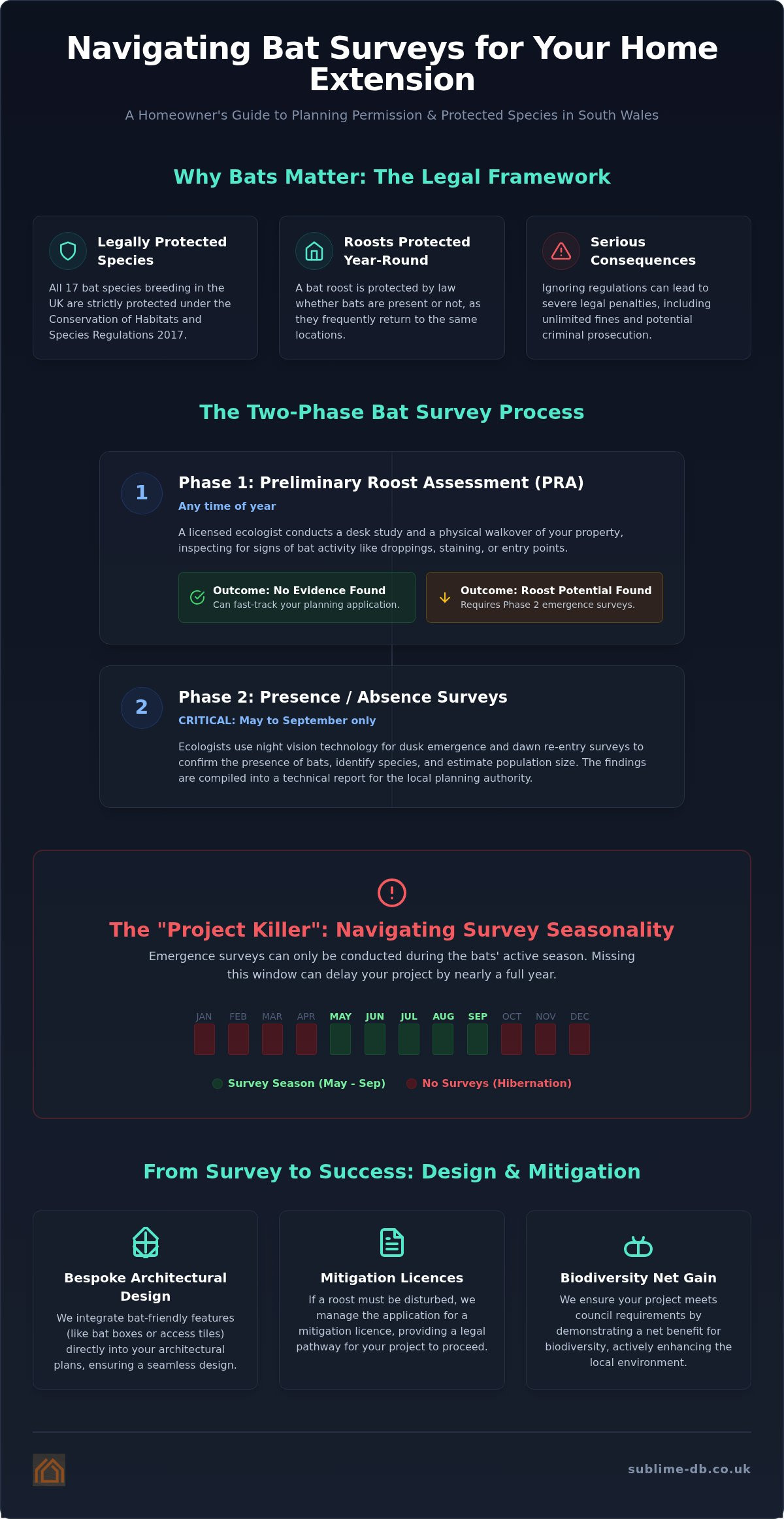
Every one of the 17 bat species currently breeding in the UK is strictly protected under the Conservation of Habitats and Species Regulations 2017. This isn't a mere suggestion; it's a legal mandate that fundamentally shapes how we approach home extensions and renovations in South Wales. A crucial point many homeowners overlook is that this protection extends to the roosting sites themselves. Even if there are no bats present at the time of your build, the structure they use for shelter is legally safeguarded. Ignoring the requirements of protected species bats ecology can lead to severe legal consequences, including unlimited fines or criminal prosecution, which is why authorities like Monmouthshire County Council are so vigilant during the planning phase.
The Legal Framework: Habitats Regulations and the Wildlife Act
Navigating the law requires an understanding of two main pillars: the Wildlife and Countryside Act 1981 and the 2017 Regulations. Whilst the former focuses on the individual animals, the latter provides robust protection for their habitats. We often look to the work of the Bat Conservation Trust to stay aligned with the highest standards of conservation and survey methodology. For your planning application, it's vital to know that a bat roost is defined as any structure or place used for shelter or protection. Because bats tend to return to the same spots year after year, the law treats the roost as protected whether the bats are currently inside or not. These regulations dictate exactly how the ecology section of your planning forms must be completed and what evidence you need to provide.
When is a Bat Survey Mandatory for Homeowners?
You might wonder if your specific project triggers these requirements. Generally, any work that disturbs a roof or a loft space will require an initial assessment. Common triggers include loft conversions, roof removals, or any construction near woodland and water sources in Cardiff and Newport. Local Planning Authorities (LPAs) now demand that all approved applications demonstrate a net benefit for biodiversity. This means your project must do more than just avoid harm; it must actively enhance the local environment. In rural Monmouthshire, older properties are high-priority for ecology officers because they often contain the traditional stone walls and slate roofs that bats find irresistible. We manage this process by identifying these triggers early, ensuring your design incorporates necessary biodiversity enhancements before the council even raises the question.
The Bat Survey Process: From Preliminary Roost Assessment to Emergence Surveys
The survey process follows a methodical sequence designed to provide total clarity for both you and the local planning officers. Understanding the technicalities of protected species bats ecology is essential for a smooth application, as it ensures all environmental risks are identified before construction begins. When we manage your project, we consider how protected species bats ecology might influence the structural design from day one. By following official government guidance, we ensure that every report submitted is robust enough to satisfy building regulations and planning conditions in South Wales.
Phase 1: The Preliminary Roost Assessment (PRA)
Phase 1 is a desk study and physical walkover of your property that can be conducted at any time of year. During this visit, a licensed ecologist carefully inspects the interior and exterior of your building, looking for specific "signs of bat activity" such as droppings, urine staining, or smoothed entry points. We often organise this assessment as part of our initial feasibility study for home renovation. This proactive approach allows us to spot potential ecological constraints before your design is finalised. If the ecologist finds no evidence of roosting potential, a "negative" result at this stage can fast-track your planning application without the need for further study.
Phase 2: Presence/Likely Absence (Emergence) Surveys
Should the PRA identify "low, moderate, or high" roost potential, Phase 2 surveys become necessary. These involve dusk emergence and dawn re-entry observations, where multiple surveyors are positioned around your home to monitor all possible entry and exit points. We use professional ultrasonic bat detectors to record the high-frequency calls of different species, such as Pipistrelles or Brown Long-eared bats. This data identifies exactly which bats are present and how they use the building. Because bats are only active during warmer months, these surveys are strictly seasonal. If you're planning a project in Monmouthshire or Cardiff, early coordination is key to avoiding a lengthy wait for the next survey window. By integrating these ecological findings into our early design phases, we help you maintain total project oversight and avoid unexpected delays during the building regulations stage.
The "Project Killer": Navigating Survey Seasonality and Timelines
Missing the survey window is the single biggest reason home extensions in South Wales stall before they even begin. The rigid seasonal calendar dictated by protected species bats ecology means your project's start date is often decided by the wildlife, not just your builder. Because emergence surveys rely on bats being active and out of hibernation, there's a finite period each year when this data can be legally collected. If you overlook this window, your planning application could be delayed by up to eight months, pushing your construction start date into the following year.
The Bat Survey Calendar: When to Book Your Ecologist
We recommend viewing the year through a simple traffic light system to keep your build on track for 2026. Understanding these windows allows us to integrate ecology into your 3D visualisations and design phase without causing a bottleneck later.
May to August (Green): This is the optimal window. Surveys conducted during these months provide the most robust data, which local planning authorities in Monmouthshire prefer.
April and September (Amber): These months are sub-optimal. Surveys may be possible depending on the weather, but they carry a higher risk of being inconclusive.
October to March (Red): Emergence surveys are impossible during this time as bats are in hibernation. Only Phase 1 desk studies can proceed.
By engaging with us early, we can organise your ecologist during the "Green" months whilst we're still refining your architectural sketches. This proactive management ensures that by the time we're ready to submit your planning application, the necessary reports are already complete.
Mitigating Delays: Can You Apply for Planning Without a Survey?
It's a common misconception that you can submit your plans and "sort the ecology later" as a planning condition. In reality, UK government guidance on bats and planning states that surveys must be completed before a decision is made. Local Planning Authorities (LPAs) in Cardiff and Monmouthshire are increasingly strict; they'll often issue a "holding objection" if the protected species bats ecology report is missing. This effectively freezes your application. A proactive approach doesn't just save time; it saves the significant costs associated with redesigning a project after a roost is discovered. We handle this "ecology headache" for you, ensuring every survey is timed perfectly to support a seamless transition from design to construction.
Mitigation and Design: Creating Bat-Friendly Extensions
Finding a roost doesn't mean your home extension has to stop. It simply shifts the focus towards creative mitigation. If our surveys confirm the presence of bats, we help you apply for a European Protected Species Licence (EPSL) through Natural Resources Wales. This licence provides the legal pathway to proceed with your build whilst ensuring the protected species bats ecology of your site is respected. Modern UK construction now embraces the concept of Biodiversity Net Gain, where the goal is to leave the local environment in a better state than before the work began. By integrating wildlife-friendly features into your initial design, we turn a potential planning hurdle into a positive contribution to the Monmouthshire landscape.
Architectural Features: Bat Bricks and Bat Boxes
We believe that high-quality architecture should work in harmony with the local ecosystem. One of the most effective ways to achieve this is by incorporating bat bricks directly into the gable ends or eaves of your new structure. These bricks are designed to look like standard masonry but contain a discrete internal cavity for roosting. If you're planning a loft conversion, we can design dedicated roosting voids within the roof space that remain separate from your living areas. This approach allows us to maintain strict insulation and vapour barrier standards whilst providing a safe haven for wildlife. We ensure all these technical details are clearly documented in your building regulations compliance South Wales guide paperwork to ensure a smooth sign-off from the building inspector.
Sensitive Lighting and Landscaping
Lighting design is often overlooked, yet it has a profound impact on protected species bats ecology. High-intensity LED security lights can inadvertently create "light barriers" that prevent bats from reaching their foraging grounds. To secure planning approval in sensitive areas like the Wye Valley, we specify low-UV, warm-toned lighting with directional shields. These shields ensure light is pointed exactly where it's needed, such as on paths or doorways, without spilling into the sky or onto known roosting spots. Even your choice of patio and driveway landscaping can help; planting night-scented flowers or maintaining native hedgerows creates "dark corridors" that support local biodiversity. We handle every aspect of this coordination, ensuring your design is as functional for your family as it is respectful of the local environment.
If you're ready to transform your home whilst staying fully compliant with local ecology laws, speak to our experts about our planning application management.
How Sublime Design & Build Manages Ecology for Your Peace of Mind
At Sublime Design & Build Ltd, we've refined a "total project oversight" philosophy that removes the "ecology headache" from your shoulders. Instead of you having to source, book, and manage independent consultants, we handle the entire process on your behalf. We understand that the technicalities of protected species bats ecology can be overwhelming, so we act as the bridge between the specialist scientific data and the practical reality of your construction site. By managing these experts directly, we ensure their findings are seamlessly integrated into your architectural plans from the very start.
One of our unique strengths is how we use technology to bridge the gap between abstract ecology reports and your finished home. We integrate mitigation requirements, such as specific bat-friendly materials or lighting shields, directly into our 3D visualisations. This means you can see exactly how these features will look on your extension or loft conversion before a single brick is laid. This clarity doesn't just benefit you; it provides South Wales planning authorities with the high-level detail they need to approve projects in sensitive ecological areas. We liaise with planners in Monmouthshire and Cardiff to negotiate sensible, cost-effective strategies that satisfy the law whilst respecting your design vision.
From Feasibility to Final Build
Our process begins long before a planning officer sees your application. During our initial site visits in locations like Abergavenny or Bristol, we identify potential ecology risks early. We've spent years building a network of trusted ecology partners across South Wales who understand our high standards for precision and integrity. Having a single point of contact for your design, planning, and ecology needs means nothing is lost in translation. We take full responsibility for the project's timeline, ensuring that seasonal survey windows are accounted for and that your construction phase remains legally compliant and ecologically responsible throughout.
Get Your Project Started with Sublime Design & Build Ltd
Every successful project starts with a clear understanding of the site's potential and its constraints. Whether you're planning a complex loft conversion in the heart of Monmouthshire or a modern single-storey extension in Cardiff, we're here to guide you through every stage. We invite you to book a comprehensive feasibility study with us. We'll assess your property and provide a roadmap for navigating planning and protected species bats ecology with confidence. Our family-run team is dedicated to delivering a transformed environment that balances your lifestyle needs with professional heritage and industry standards.
Securing Your Project's Future in Monmouthshire
Navigating the requirements for protected species bats ecology doesn't have to be a source of stress or delay. By understanding the seasonal survey windows and integrating mitigation into your design early, you can protect local wildlife whilst achieving your vision for a perfect home extension. We've shown that proactive planning is the key to avoiding the seasonal bottlenecks that often stall South Wales builds.
As a family-run business with over 20 years of local expertise, Sublime Design & Build Ltd specialises in Monmouthshire planning applications and provides comprehensive design and build project management. We handle the technical coordination with ecologists and planners so you can focus on the excitement of your new space. Our team ensures every detail of your build is compliant, creative, and ready for construction. If you're ready to move forward with confidence, book your project feasibility study with Sublime Design & Build Ltd today. We look forward to helping you create a beautiful, sustainable home that stands the test of time.
Frequently Asked Questions
Do I need a bat survey for a simple single-storey extension?
You'll likely need a survey if your project involves disturbing the roofline, hanging tiles, or weatherboarding. Even a simple single-storey extension can trigger a request from planning officers in Cardiff or Monmouthshire if the property is near water or woodland. We assess these risks during our initial feasibility study. If your home has potential roosting features, a Preliminary Roost Assessment is usually the first step required to satisfy the local planning authority.
How much does a bat survey for planning cost in South Wales?
Costs for ecological assessments vary based on the size of your property and the complexity of the project. A Preliminary Roost Assessment is generally more affordable than full emergence surveys, which require multiple specialists and technical equipment. Whilst we don't set these external fees, we manage the procurement of these services as part of our total project oversight. This ensures you receive a fair market rate from trusted specialists across South Wales.
What happens if a bat survey finds bats in my roof?
Discovering bats is a manageable milestone rather than a project killer. If a roost is identified, you'll likely need a mitigation licence from Natural Resources Wales to proceed legally. We specialise in integrating protected species bats ecology requirements into our architectural designs. This might include adding bat bricks or creating dedicated roosting voids. These solutions allow your extension or loft conversion to proceed whilst ensuring the local bat population remains undisturbed and protected.
Can I do my own bat survey to save money?
No, planning authorities in Newport and Cardiff only accept reports from licensed ecologists. These professionals must hold specific certifications to handle bats and survey their habitats legally. A "DIY" survey carries no weight in a planning application and could lead to significant delays or legal trouble if protected species are accidentally disturbed. We handle the coordination with accredited partners to ensure your report meets all professional standards and building regulations for your peace of mind.
How long is a bat survey report valid for in a planning application?
Most bat survey reports are considered valid for one to two years by local planning authorities. If your project is delayed beyond this window, you may need an updated assessment to account for any changes in bat activity. In Monmouthshire, planning officers typically look for data from the most recent survey season. We help you time your application submission to ensure your ecological data remains current throughout the entire planning and building process.
Can I get planning permission if I have bats?
Yes, you can certainly secure planning permission if bats are present on your site. The key is demonstrating that your project won't negatively impact their welfare. By including a clear mitigation strategy and applying for the necessary licences, you can satisfy the "Net Benefit for Biodiversity" requirements. We've successfully managed many applications where protected species bats ecology was a factor, ensuring the final design accommodates both your lifestyle needs and the local wildlife.
What is the best time of year to organise a bat survey?
The best time to start is right now with a Preliminary Roost Assessment, which can be done at any time of year. However, if your property has roosting potential, emergence surveys must take place between May and September. The optimal window is June to August when bats are most active. We recommend booking these assessments early in the year to avoid missing the seasonal window, which could delay your South Wales build by many months.


Comments